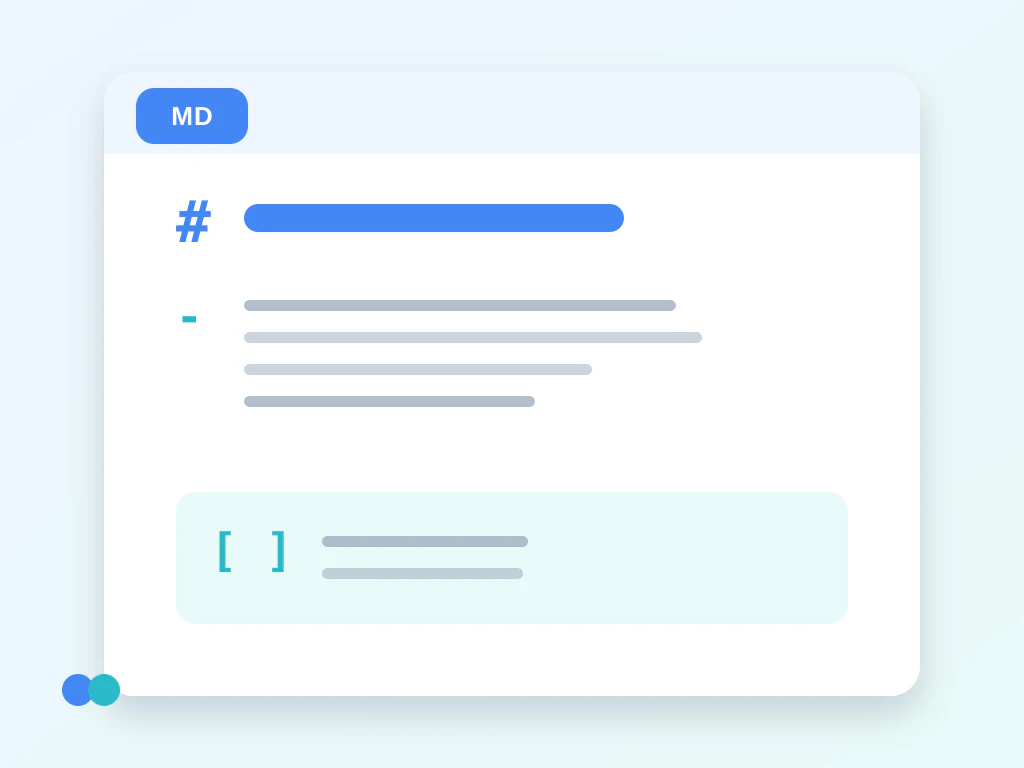

Przenieś tabelę zapisaną wyłącznie jako obraz do pliku README, który można edytować
Przygotuj czytelną tabelę Markdown z obrazu przedstawiającego wiersze i kolumny. Sprawdź zarówno rozpoznane wartości, jak i składnię tabeli z pionowymi kreskami, ponieważ nagłówki obejmujące wiele kolumn, podziały wierszy i dosłowne znaki pionowej kreski mogą wymagać ręcznych poprawek.
Tabele pomocnicze w plikach README
Odtwórz niewielką tabelę porównawczą dostępną tylko jako obraz w formie tekstu, który można sprawdzić w porównaniu zmian kodu źródłowego i wyświetlić w dokumentacji.
Notatki tabelaryczne w notatnikach Markdown
Zachowaj niewielką tabelę pomocniczą w edytowalnej formie obok własnego objaśnienia, a oryginalny obraz pozostaw do weryfikacji.
Sprawdź składnię tabeli równie dokładnie jak rozpoznane wartości
- Przytnij do jednej tabeli i zachowaj jej nagłówki.
- Porównaj wartości komórek i sprawdź, czy separatory nagłówków oraz wiersze danych mają spójne kolumny.
- Sprawdź podgląd tabeli Markdown i w razie potrzeby uprość scalone komórki lub usuń podziały wiersza wewnątrz nich.
Scalone komórki, dosłowne znaki pionowej kreski i wiersze nagłówków Markdown
- Czy tabela Markdown może dokładnie odwzorować scalone komórki obrazu?
- Podstawowe tabele potokowe nie obsługują scalonych komórek. Rozdziel nagłówki obejmujące wiele kolumn, powtórz etykiety albo opisz grupowanie w otaczającym tekście.
- Co zrobić ze znakiem pionowej kreski wewnątrz komórki tabeli?
- Sprawdź, jak Twój renderer zabezpiecza dosłowne znaki pionowej kreski. Niezabezpieczona kreska może podzielić jedną wartość na kilka kolumn.
- Czy Markdown to właściwy format eksportu dużej tabeli liczb?
- Markdown sprawdza się w czytelnej dokumentacji. Do importu danych wybierz CSV, a do pracy w arkuszu — Excel, zwłaszcza gdy potrzebujesz analizy liczbowej lub masz wiele rekordów.
- Dlaczego pierwszy wyodrębniony wiersz wymaga szczególnej uwagi?
- Tabele w Markdown mają wiersz nagłówka, a po nim wiersz separatorów. Sprawdź, czy rozpoznano właściwy nagłówek i czy nie użyto w jego miejsce wiersza z danymi.