URL Encoder and Decoder — Encode or Decode a URL Online
Percent-encoded URLs are unreadable, and hand-editing breaks them. Paste any string or full URL to encode or decode it correctly in component or full-URL mode, right in your browser.
How to URL encode and decode text, query parameters and full URLs
This URL encoder and decoder percent-encodes text so it can sit safely inside a link, and turns percent-encoded text back into something readable. Choose Encode or Decode, then Component for a single value or Full URL for a whole address, and the result appears as you type. The conversion runs in your browser with the standard JavaScript functions and treats text as UTF-8.
Encode a query parameter or a piece of text
Keep Mode on Encode and Strictness on Component for a value that goes after a key and an equals sign. Everything except letters, digits, the exclamation mark and the marks - _ . ~ * ' ( ) is replaced, so a b&c=d/é becomes a%20b%26c%3Dd%2F%C3%A9. A space becomes %20, not a plus sign, and the accented letter becomes its two UTF-8 bytes. Because the ampersand, equals sign and slash are escaped, the value cannot break the surrounding URL.
- Keep Mode on Encode.
- Choose Component under Strictness.
- Paste the value into Input.
- Select Copy and place the result after the key and equals sign.
Encode a whole URL without breaking it
Switch Strictness to Full URL to encode an address as a whole. The characters that structure a URL, such as : / ? # & = and +, are left alone, while spaces and non-ASCII letters are encoded, so https://example.com/a b?q=é&x=1 becomes https://example.com/a%20b?q=%C3%A9&x=1. This mode cannot tell which ampersand belongs to your data. When a value may contain one, encode each value in Component mode first, then assemble the URL. Once it is ready, turn the link into a QR code.
Decode a percent-encoded URL to read it
Choose Decode and paste the text. Component decodes every %XX sequence. Full URL leaves the sequences that stand for reserved characters, such as %2F, %3F, %23, %26 and %3D, in place, because turning them back into characters would change the structure of the URL. A plus sign is never turned into a space. If a percent sign is not followed by two hex digits, or the bytes are not valid UTF-8, the output shows a message that the text cannot be decoded.
Fix double encoding and other common problems
Encoding text that is already encoded turns each percent sign into %25, so %20 becomes %2520, which is the usual sign of double encoding. Decode once to undo it, then encode only the raw value. Line breaks become %0A, and trailing spaces become %20, so trim the input first. Binary data does not belong in a link, but a URL-safe Base64 string can travel in one without further escaping.
Before you use an encoded URL
- Encode each value on its own in Component mode, then join the parts.
- Never encode a string that is already percent-encoded.
- Test the link after encoding, because the receiving service decides how it reads plus signs.
- Use Full URL mode only for a complete address, not for a value inside one.
Other ways to package a link or value
Binary data or a whole file is better encoded as Base64 or a data URL than percent-escaped. When the encoded link is ready, turn it into a static QR code, and to build a readable slug from a page title, convert the words to kebab-case before encoding.
What you can do with URL Encoder/Decoder
Review the main capabilities before you begin.
- Percent-encode URLs for safe linking
- Decode encoded URLs back to plain text
- Encode single query parameters cleanly
- Fix broken links with special characters
- Encode whole URLs or individual components
- Prepare share links for social and email
Settings reference
2 settings
Available controls for URL Encoder/Decoder.
Settings
- ModePresets
- Switch between converting plain text into percent-encoded form and turning an already-encoded URL or string back into readable text.Options: EncodeDecode
- StrictnessPresets
- Component escapes reserved characters like :/?#[]@ so the result is safe inside a single URL part; Full URL leaves them intact so an entire web address stays valid.Options: ComponentFull URL
Related tools for URL Encoder/Decoder
Tools for common next steps after URL Encoder/Decoder.
Developer Tools
Base64 Encoder / Decoder
Encode text or files as Base64, or decode Base64 to supported text, with URL-safe and UTF-8 options in your browser.
Try it now
Business Generators
QR Code Generator
Create static QR codes for supported URL, WiFi, UPI, phone and email data without a hosted redirect.
Try it now
Developer Tools
JSON Prettify
Validate JSON, format it with 2, 4 or 8 spaces, or minify it in your browser.
Try it nowFrequently Asked Questions
How URL Encoder/Decoder helps you get it done
Real problems it solves every day — for businesses, creators, and everyday tasks. Find the use case that fits you and start.
Build Query Strings for REST APIs
Encode search terms, filters and IDs for GET requests to REST APIs, Algolia, Elastic and Google Search so reserved characters do not break the request URL
Tracking Parameters for Marketing Links
Percent-encode UTM parameters, campaign names and referrer strings for Google Analytics, Facebook Ads and HubSpot links shared across email and social channels
Pass Filters & Search Terms in URLs
Encode multi-word search queries, special characters and sort options into shareable URLs for SaaS dashboards, e-commerce filters and admin panels
Generate mailto: Links with Subject & Body
Build mailto: links where the subject and body contain newlines, punctuation and emoji so click-to-email buttons open Gmail and Outlook with the message pre-filled
Embed Messages in WhatsApp & SMS Share Links
Encode pre-filled WhatsApp, Telegram and SMS share links so customers can tap a button on your site and open the messenger with the marketing message ready
Escape User Input for Safe URL Construction
Encode user-controlled values before injecting them into URLs to avoid request-smuggling, redirect-injection and broken-link bugs in production web apps
Debug OAuth & Redirect Callback URLs
Decode a redirect_uri, state or code parameter from an OAuth callback or webhook log to see exactly what value a provider received — often the fastest way to spot a double-encoding bug breaking a login flow.
Build Mobile App Deep Links
Percent-encode parameters going into a custom-scheme or Universal/App Link (myapp://open?ref=...) so special characters in referral codes or shared content IDs survive the jump from browser to app.
Safe Direct-Download Links for Files with Spaces
Encode file names containing spaces, parentheses or accented characters (e.g. 'Q1 Report (Final).pdf') into a URL that CDNs and browsers won't truncate or misinterpret when linked directly.
Check Where a Shortened or Encoded Link Really Goes
Paste a suspicious percent-encoded or forwarded link into Decode mode to reveal the real destination URL hidden inside redirect or tracking parameters before clicking it.
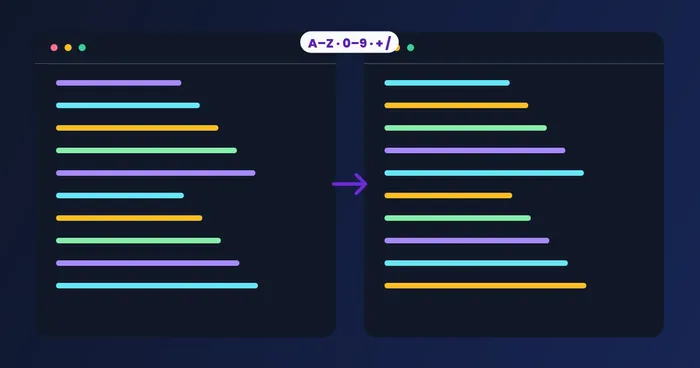
Watch each transformation land
Every photo crosses the slash untouched and comes out the other side finished.