How it works
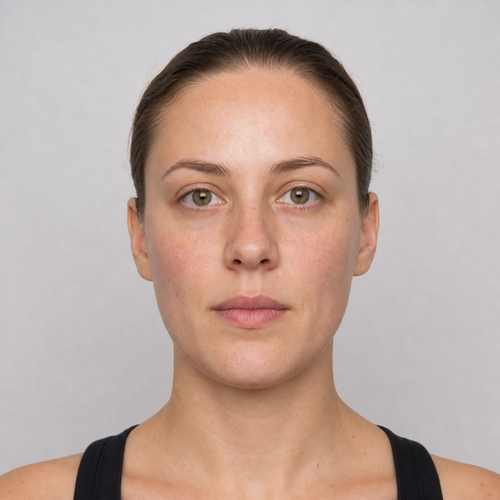
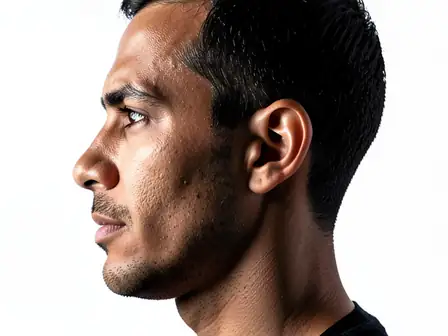
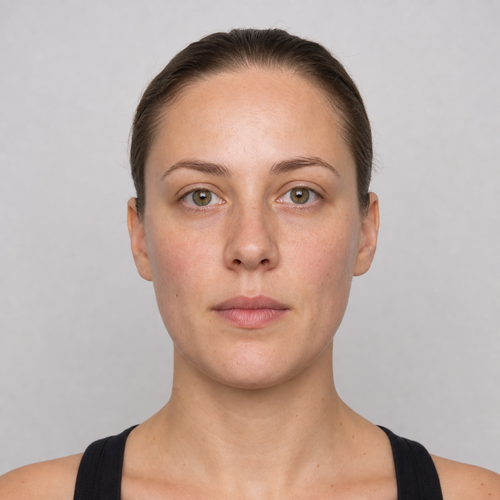
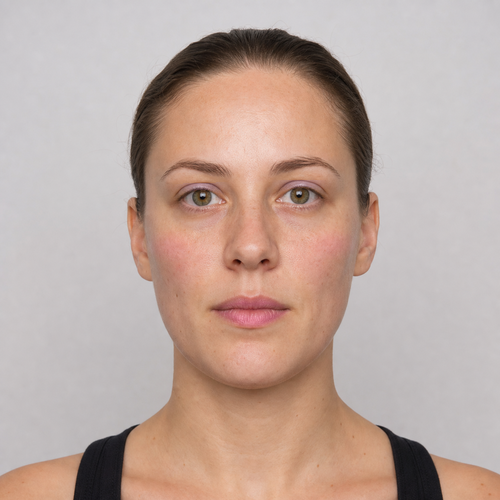
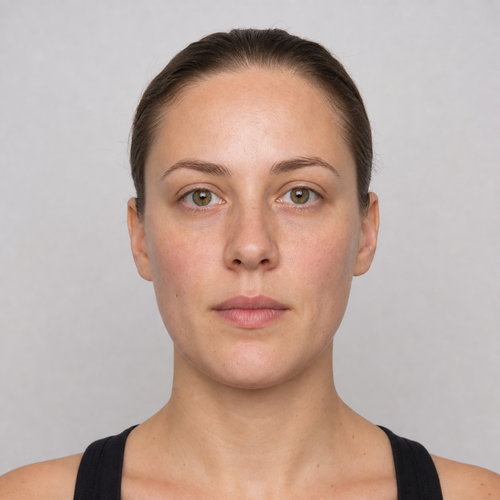
Editorial Beauty does not regenerate, reshape, patch, relight, or generally blur the portrait. It needs one complete, near-front face: the face is checked carefully, its full shape is mapped, and its skin is separated from hair, beard, body, clothing, accessories, and background. It combines exactly three broad skin-polish zones across the forehead and both cheeks with exactly five small color zones above both upper eyelids, over both upper cheeks, and inside the outer lip line. Its editorial palette uses stronger plum eyeshadow, rose blush, and berry lip tint than Soft Glam, but never spreads beyond those zones. The skin polish is measured against the surrounding skin only, so nearby background, hair, or beard color cannot bleed into it; it reduces only medium-sized patches of uneven tone and color while keeping fine detail and pores. Even at full intensity, each skin correction is capped at a small fixed amount. Blush and lip tint add color while keeping the original brightness of the skin, and eyeshadow darkens the lids slightly more than Soft Glam, still within a fixed limit. The eyes, irises, eyebrows, nose, and inside of the mouth are always protected. Face shape, expression, protected features, hair, beard, clothing, scene lighting, background, framing, transparency, and every pixel outside the eight zones are copied unchanged into a lossless PNG. Side profiles, incomplete or tiny faces, unclear skin, and glasses or anything else that leaves a required zone without enough visible skin are refused instead of redrawn. Already-even skin may receive only the editorial colors; a portrait with no safe visible correction is left unchanged and refused.