

Convert TIFF to JPG for Printing
Conversion setup loaded automatically
Convert TIFF to JPG for printing. Keep the quality high so photos and documents come out crisp on paper, with temporary uploads deleted automatically.
- Print-shop and office-printer handoffs
- High-quality proofs and reference sheets
- A compatible copy while keeping the source archive
Drop a TIFF / TIF file or click to browse
TIFF to JPG for a photo lab or print service that asks for JPG
If the print shop accepts TIFF, send the TIFF: it is lossless, and many professional printers prefer it. Convert to JPG when the service, often an online photo lab or a print kiosk, accepts JPG only, or when the TIFF is too large for its upload form.
Set quality to 95 or 100 for prints. The page opens at 90, which already keeps full color resolution along edges, and the extra headroom is cheap for a file that ends up on paper rather than a screen. The JPG keeps the TIFF's pixel dimensions, so print size is unchanged: a 3600 × 2400 scan still makes a 12 × 8 inch print at 300 pixels per inch. A 16-bit TIFF becomes 8 bits per channel, standard for JPG prints, so check smooth skies for banding.
Scans often need tidying first: crop away the scanner bed edges and straighten a crooked or sideways scan. Only the first page of a multi-page TIFF is converted. For a stack of scanned prints, Premium converts up to 60 files at once and Pro up to 200, delivered as one ZIP.
Set up for Convert TIFF to JPG for Printing
Prepared settings
- Starting point
- Tiff source image
- The upload accepts the source type for the tiff-to-jpg converter directly.
- Prepared workflow
- Tiff → JPG for Printing
- The destination format and use context are already identified; only the real file is still required.
- Output control
- JPG output
- Use quality or lossless controls when the destination format supports them.
- Review rule
- Open the JPG result before publishing
- Check transparency, color, and visible detail because formats represent those properties differently.
Best-fit uses
- Print-shop and office-printer handoffs
- High-quality proofs and reference sheets
- A compatible copy while keeping the source archive
Frequently asked questions
- What quality should I use when converting TIFF to JPG for print?
- Use the highest quality setting for print — printers resolve more detail than screens, so avoid heavy compression.
- Does converting TIFF to JPG lose detail?
- At high quality the loss is minimal. For archival or large-format print, keep quality at or near maximum.
- Can I adjust the JPG output quality?
- Yes. Review the converted JPG result and adjust quality when that format supports it. Keep a higher setting for detail, or lower it when file size matters more.
- What happens to my TIFF upload after conversion?
- The file is used only to create the requested JPG result and is automatically deleted after the temporary processing period.
What you can do with TIFF to JPG
Review the main capabilities before you begin.
- Convert TIFF and TIF scans to web-friendly JPG
- Turn pro camera and fax images into shareable JPGs
- Shrink large TIFF files into lightweight photos
- Fix sideways scans with auto-orientation
- Set JPEG quality to balance size and clarity
- Convert many TIFF files at once in batch
Settings reference
5 settings
Available controls for TIFF to JPG.
Settings
- Output formatDropdown
- Chooses the file type you download. The page opens on its own output format; switch to any other format before converting.Options: JPGPNGWebPAVIFGIFTIFFBMPICOPDF
- QualitySliderRange: 20–100 · Default: 90
- For JPG, WebP, AVIF and image-to-PDF output: higher keeps more detail but makes a bigger file; 60–80 suits most photos. Documents (Publisher, XPS, EPS…) become PDFs with every page and sharp text, with no quality setting.
- Lossless modeOn / Off
- For WebP and AVIF output: keeps every pixel exactly (best for logos, graphics and transparency) at the cost of a larger file.
- Background fillColor picker
- For JPG, BMP and image-to-PDF output, which can't store transparency: the color that fills transparent areas (white by default).
Mode
- Single file / BatchDropdown
- Process one file or a batch with shared settings. Batch results download as one ZIP.Options: Single fileBatch
Popular use cases
Related tools for Convert TIFF to JPG for Printing
Tools for common next steps after Convert TIFF to JPG for Printing.
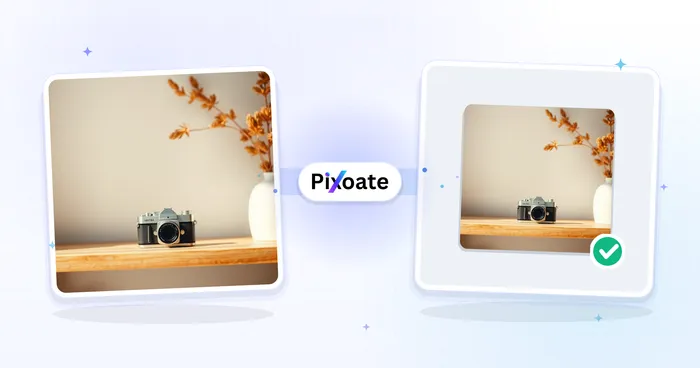
Photo Editing & Utilities
Compress Image to KB
Compress JPG, PNG or WebP files toward a chosen size such as 20KB, 50KB or 100KB, then review the result.
Try it now
Photo Editing & Utilities
Resize Image
Resize an image to exact dimensions or by percentage. Preview and download the result.
Try it now
Photo Editing & Utilities
Image Compare Slider
Compare two images with a reveal slider and export a before-and-after PNG.
Try it nowHow TIFF to JPG helps you get it done
Real problems it solves every day — for businesses, creators, and everyday tasks. Find the use case that fits you and start.
Notarized Document Sharing
Convert scanned contracts and notarized paperwork — usually saved as TIFF by office scanners — into JPG so they attach to email, e-signature portals and client intake forms that reject TIFF outright.
MLS-Ready Real Estate Photos
Convert TIFF exports from professional real-estate cameras into JPG at the quality your MLS or Zillow/Redfin listing portal accepts, using the quality slider to balance sharp interior detail against upload size limits.
Insurance Claim File Digitization
Turn fax-machine and back-office scanner TIFF output into JPG so claims adjusters can view attachments directly inside a claims portal or CRM instead of needing a separate TIFF viewer.
Family History Archive Digitization
Convert high-resolution TIFF scans of old photographs and documents from an archival flatbed scanner into JPG for uploading to genealogy sites, printing services and family-tree software that don't accept TIFF.
Microscopy & Lab Slide Image Sharing
Convert TIFF exports from lab microscopes, digital slide scanners and imaging software into JPG for pasting into research papers, lab notebooks and presentation slides, where TIFF is either rejected by the submission portal or needlessly bulky for a figure that doesn't need archival fidelity.
Guides for this tool
Watch each transformation land
Every photo crosses the slash untouched and comes out the other side finished.