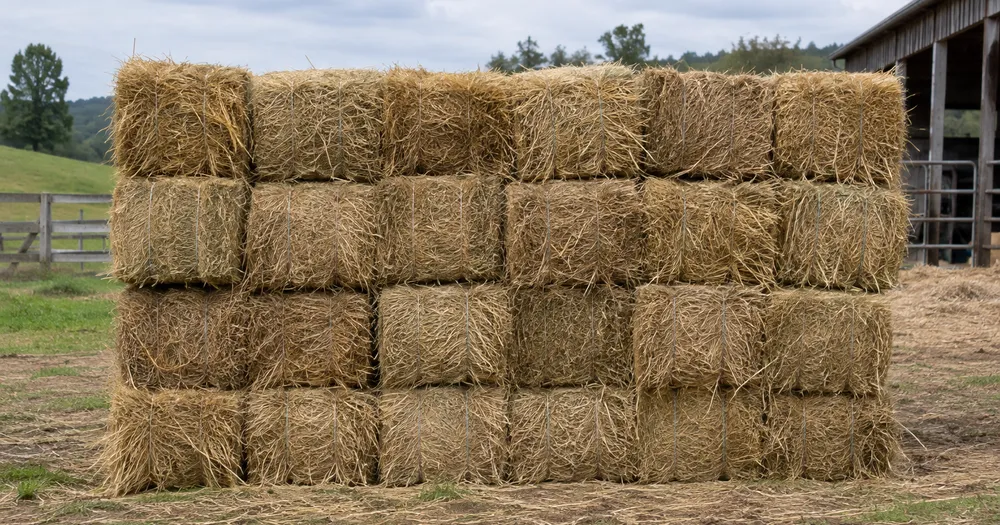
Count hay bales in a stack from a photo
Works with JPG, PNG, WEBP · Free up to 20 MB, Premium 50 MB
Photograph the visible face of the stack or pallet straight-on — the AI estimates visible hay bales; review and correct each face before combining rows. Built for farmers, ranchers and livestock markets — review and correct each photo before adding it to a CSV or PDF tally.
- Review the photo, then count visible hay bales
- Upload a photo and get an automatic count
- Review the markers to catch hay bales counted twice or missed
- Free to use · No signup required · Without watermark
Upload Image
Tips for an accurate count
• Use an even, well-lit photo with the hay bales fully in frame
• Keep your hay bales visible and avoid overlapping items
• Dots and heatmap show retained detections — review and correct the tally
About the Hay Bales Counter
The hay bales counter counts visible hay bales from your photo and marks detections for review. Counting starts automatically once the photo and item are ready. Visibility, overlap and similar-looking items can affect the total. Built for farmers, ranchers and livestock markets.
How It Works
1. Photograph your hay bales
2. Upload your photo to count hay bales automatically
3. Review the markers and correct the tally if needed
4. Add to the tally sheet and export your count as CSV
Perfect For
• Barn and field stack counts after baling
• Checking loads out against a sale or haulage note
• Winter feed planning from remaining stack quantities
• Recording bale numbers for an insurance inventory
Counting round and square hay bales in a field or barn
Farmers count bales after baling to plan winter feed, contractors count them to bill by the bale, and buyers check a load against the sale note. The method depends on the bale. Round bales stacked in a row or pyramid show their circular faces, so photograph the flat ends square-on; small and large square bales in a barn build a wall of rectangles, so shoot that face straight on.
Bales scattered across a field after baling are easiest from above, with a drone flown along the field before collection. Wrapped silage bales reflect strongly in sun, and black or white wrap changes the contrast from bale to bale, so an example of each wrap color helps. Loose hay, net wrap tails and straw on the ground can earn dots; once an example is marked, raising Ignore small detections under Advanced filters the smallest ones. Bales at the back of a barn stack stay hidden, so count each accessible face and treat any depth multiplication as an estimate.
Record each field, stack or trailer load as its own row with the bale type in the label, and the CSV becomes a simple feed inventory. Hand-tied crops are handled on the crop bundle page, and the herd you are feeding can be counted with the cattle counter.
Frequently asked questions
- Can it count a full stack when some items are hidden?
- It can only estimate the visible photo content. For regular stacks, photograph and review each accessible face, correct the tally, and treat any multiplication by depth as an estimate. A marked image supports review but does not prove the physical quantity.
- What if the photo has more than just hay bales in it?
- The counter automatically looks for hay bales in your photo. Similar-looking distractors can still affect the result, so review every marker before using the total.
- Can I count several photos into one total?
- Yes — count each photo and add every reviewed result to the tally sheet as a labelled row. Export the tally as CSV or a PDF report, or save it to your account.
- Is it free and private?
- Yes. You can count, review and download a free result without an account. Downloads are free without a watermark. No signup required. Server-processed photos are encrypted in transit and removed under our Security policy.
What you can do with Livestock Counter
Review the main capabilities before you begin.
- Count cattle, sheep, goats and poultry from a photo
- Run fast herd checks in the field
- Tally market lots and sale pens from images
- Optionally mark an animal to target one type
- Review each counted-animal marker in the overlay
- Add multiple field photos into one running tally
- Filter tiny detections, then review the remaining markers
Settings reference
14 settings
Available controls for Livestock Counter.
Upload
- Single photo / Bulk auditPresets
- Choose a single-photo count or a Premium bulk audit. Review every result.Options: Single photoBulk audit
Count
- Included markersSliderRange: 0–1 · Default: 0.21
- Starts at 21%; slide toward Show more to include weaker markers or Only strongest to hide them.
- Overlay stylePresets
- Choose dots, a heatmap, both or a clean preview.Options: BothDotsHeatNone
Advanced
- Result overlayDropdown
- Choose how count markers appear in the on-screen preview; the download keeps its own markers.Options: Dots + heatmapDots onlyHeatmap only
Tally
- Add to tallyOne-click
- Add this count to the tally sheet under the name of the object that was counted. Signed-in accounts add finished counts automatically unless that is turned off under Account settings; in bulk mode every photo also has its own Add to tally button.
- LabelText input
- Rename a tally row. Edits and removals wait until you choose Save changes, so you can fix several rows at once.
- CountNumber input
- Correct a row's count; totals, the chart and exports follow once the change is saved.
- Save changesOne-click
- Apply every edited or removed tally row in one step, or choose Discard changes to leave the sheet as it was.
Chart
- By objectPresets
- The chart is the same in every counting tool and covers the tallies of all of them. By object draws a separate line chart for each tally name, such as pipes and people. By tool draws a chart for each counting tool.Options: By objectBy tool
- PeriodPresets
- Choose how far back the chart looks. Days without a count appear as zero.Options: 7 days30 days90 days12 months
History
- Counting setupGallery
- Keep comparable counts together. A first setup is created for you, so the first count can be saved straight away.
- Observed atText input
- The date and time of the count, shown as a date and a time field.
- NotesText input
- Starts with every detected object and its count, one per line, such as Pipes - 11. Edit it before saving.
- Save countOne-click
- Save the count to your account history. Open a saved count later to correct it or download its source photo.
Related tools for Livestock Counter
Tools for common next steps after Livestock Counter.

Counting & Inventory
Object Counter
Estimate an object count from a photo. Review and correct the numbered markers before using the count.
Try it now
Counting & Inventory
Live Object Counter
Aim your phone at separated, fully visible items and review the detector markers as the count updates in real time.
Try it now
Counting & Inventory
Bottle Counter
Count bottles on shelves, in crates, or in cold rooms from one photo, with counted detections marked for review.
Try it nowHow Livestock Counter helps you get it done
Real problems it solves every day — for businesses, creators, and everyday tasks. Find the use case that fits you and start.
Daily Herd Head Counts
Photograph the pen or paddock each morning for a preliminary head-count estimate, then review the markers and physically confirm any apparent missing or strayed animal before acting.
Market Lot Review for Buyers and Sellers
Both sides of a livestock sale can use separate AI-assisted drafts, then jointly check and correct them against the physical lot before closing. A marked image can support that review but is not a verified sale record by itself.
Transport Load-Out Manifest Review
Use the marked result as a preliminary transport estimate, then have qualified staff complete the required physical and manifest checks and correct the tally. The AI image alone is not a compliance or load record.
Drone Pasture Surveys at Scale
Fly a top-down drone pass over open pasture for a large-area estimate, then review the markers and physically confirm exceptions before using the tally for herd decisions.
Multi-Species Farmyard Inventory
Set Counting mode to Distinct objects on a mixed paddock of cattle, sheep or poultry so each animal is boxed; for a species-by-species farm inventory, mark one example of each species in Similar items and read Found per example.
Watch each transformation land
Every photo crosses the slash untouched and comes out the other side finished.