
How to Make Your realestate.com.au Listing Stand Out and Follow Its Photo Rules
Follow the Acceptable Use Policy on AI edits, main images, watermarks and collages while improving light, clutter and presentation in listing photos.
Written by the Pixoate team. We check how each tool behaves before we describe it, and we date any prices or portal rules we quote.
On realestate.com.au, make the main image a real photograph of the property, keep watermarks, text and collages out of photos, and clearly disclose any AI-edited or AI-generated image.
On realestate.com.au, buyers scroll through a lot of listings quickly, so photos decide who gets a second look. Unlike many portals, realestate.com.au publishes an Acceptable Use Policy that is specific about what can and cannot appear in listing photos, including AI-edited content. Knowing it helps you avoid a listing being flagged or delayed.
This guide was last checked in November 2026. It summarizes the rules that matter for photos, based on the policy text amended in September 2026, and shows how to improve photos within them. Always check the current policy and ask your agent, because policies change.
The quick version
- Use real photos of the property for the main image, not a lifestyle shot or drawing.
- Keep branding, text and collages out of photos.
- Edit honestly, and clearly disclose any AI-edited or AI-generated content.
- Improve light, clutter and presentation without changing the property.
- Ask your agent to review the gallery before it goes live.
What the Acceptable Use Policy says
The realestate.com.au Acceptable Use Policy for residential listings includes these points relevant to photos:
- AI-edited or AI-generated content. Photographs, video, descriptions or other content generated or edited with AI tools may be published only if it is not likely to mislead buyers or renters about the nature, condition or features of the property or the surrounding area, and the AI use is clearly disclosed in a prominent location on or next to the content. The policy does not set exact wording and does not name virtual staging, so confirm with your agent how it applies.
- Main image. It must be an image of the property being offered. A lifestyle image is not acceptable as the main image.
- Watermarks. Agency watermarks are not acceptable unless they are a transparent watermark with no color in the bottom right corner covering no more than 15% of the image.
- Text and marketing in photos. Text that detracts from the image, and agency marketing such as branded signboards, cars or coffee cups, is not acceptable.
- Collages. A collage inside one frame is not acceptable.
- Misleading or deceptive conduct. A general prohibition applies to any content.
Listings that breach the policy can be suspended or removed after notice, so a clear gallery saves time.
Australian law on accurate images
The ACCC says information a business provides, including images and descriptions, must be accurate, truthful and based on reasonable grounds, and that it makes no difference whether a business intended to mislead. The pages we read do not mention digital staging specifically, but the principle applies to listing photos. Separately, NSW and Victoria have introduced new price display rules for sale advertising, so ask your agent whether anything affects your campaign.
Outdoor spaces and sequence for Australian listings
In many Australian listings, the outdoor space is part of how the home is used, so it deserves proper attention. Photograph the deck, patio or alfresco area in good light with the furniture arranged tidily, and include the garden, pool or any outbuildings. Show how the outdoor area connects with the indoor living space, since buyers often value that flow.
Sequence the gallery from the front of the home, through the main living areas, kitchen, bedrooms and bathrooms, and finish with the outdoor spaces and any extras. Keep the main image as a clear photograph of the property itself, in line with the policy. Review the order on a phone, because that is how many buyers will view it, and make sure labels for any AI-edited or generated images are visible without being intrusive. A well-ordered gallery makes the home easier to understand and the policy easier to follow.
Improve photos within the rules
- Dark or flat rooms: improve light and presentation with the real estate photo editor.
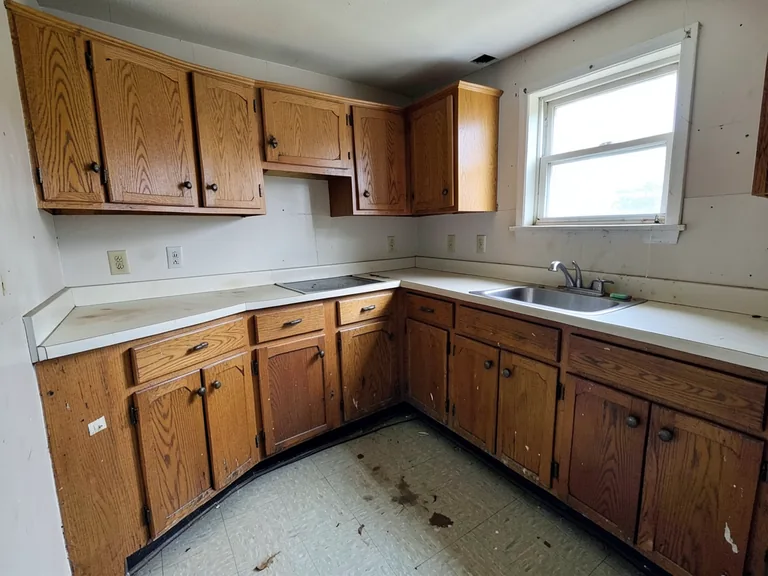
- Temporary clutter: remove it from the photo with Declutter Room AI.
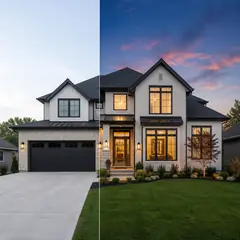
- Grey skies: a Day to Dusk image is an AI edit, so disclose it clearly where it appears.
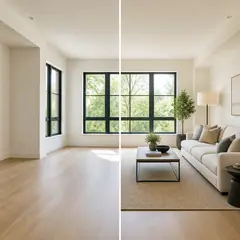
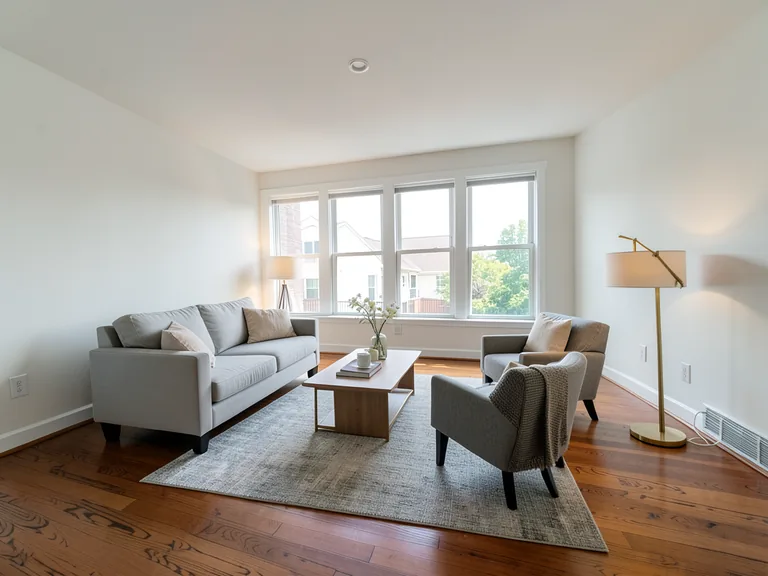
- Empty rooms: a furnished concept from Virtual Staging AI is AI-generated content, so it needs clear, prominent disclosure and must not mislead.
Do not change the size of a room, remove power lines or hide defects. For costs of the physical alternative, see how much property styling costs in Australia.
A worked example: avoiding a flagged listing
Imagine an agent preparing a listing for a family home. The photographer supplies twenty images, including a dusk sky replacement, a virtually furnished living room and a collage of three small photos in one frame. The agency has also added its logo in the center of the main photo.
Checking this against the policy, several things stand out. The collage is not acceptable and should be split into separate photos. The logo in the center is not acceptable, since only a transparent watermark in the bottom right corner covering no more than 15% of the image is allowed. The dusk sky and the furnished room are AI-edited, so they must not mislead and should be clearly disclosed on or next to the image. The main photo should show the property itself.
Fixing those points before upload takes less than an hour and avoids a listing being delayed or removed. It also protects the agent's reputation, since buyers who see honest, clearly labelled images are more likely to trust everything else in the listing.
Photograph for Australian buyers
- Shoot in good daylight, with all lights on and blinds open.
- Keep the camera level and avoid extreme wide-angle settings.
- Show outdoor entertaining areas, which are important in many Australian listings.
- Clear bins, hoses, cars and laundry from view.
- Take photos in landscape, and check the gallery on a phone.
Keep a disclosure checklist
Disclosure is easiest when it is planned before you edit. Keep a short list of every image that has been generated or changed with AI, such as a staged room or a dusk sky. Note where each label will appear, so it is on or next to the image and easy to see. Keep the unedited originals in a separate folder, and give your agent both versions with clear file names. If a photo is only brightened or straightened, you can still mention it to your agent and let them decide how the policy applies.
Why the policy matters beyond compliance
It is tempting to treat portal rules as obstacles, but they also describe good practice. Requiring that the main image shows the property protects buyers from being drawn in by a pretty garden shot that is not the home. Limiting watermarks and text keeps galleries clean. Requiring clear disclosure of AI-edited content protects the trust that makes online property search work in the first place.
For sellers, the lesson is that honesty and quality go together. Listings that are bright, accurate and clearly labelled tend to attract serious buyers, while listings that rely on tricks tend to disappoint at the first viewing. Following the policy is not only the safe choice. It is also the one that produces the best long-term results.
Review the gallery before it goes live
Ask your agent to show you the order, the first photo and any disclosure labels. Look for dark, tilted or inconsistent images. Remove or replace anything that could mislead.
When your agency handles the upload
In most cases the agency or agent uploads the listing, so your role is to supply good material and to check the result. Ask them how they handle AI-edited images, where labels will appear and whether the original photos will be kept. Tell them about every edit that has been made, including small ones, so they can decide how the policy applies.
If the platform flags an image, ask for the reason and respond promptly. A short, polite message with the original image and a clear explanation often resolves the issue. Keep a simple record of which images are edited and how they are labelled. If your agency uses several portals, remember that each has its own rules, so an image that is fine in one place may need a different label in another. A little organization at the start means fewer surprises later.
Related guides
For the wider picture, see our guide to real estate listing photos.
Frequently asked questions
Can I use AI virtual staging on realestate.com.au?
The Acceptable Use Policy, amended September 2026, allows AI-edited or AI-generated content only if it is not likely to mislead buyers about the property and the AI use is clearly disclosed in a prominent place on or next to the content. It sets no exact wording, so confirm how it applies with your agent.
Can my main photo on realestate.com.au be a lifestyle image?
No. The policy says the main image must be a photograph, drawing or other image of the property being offered, and a lifestyle image is not acceptable as the main image. Use a clear photo of the home itself, and keep lifestyle images, if you use any, further down the gallery.
Can an agent watermark my realestate.com.au photos?
Only in a limited way. The policy says agency watermarks are not acceptable unless they are a transparent watermark with no color in the bottom right corner covering no more than 15% of the image. Logos placed across the main photo, branded objects and marketing text in photos are not acceptable.
What happens if my realestate.com.au listing breaches the policy?
Under the policy, REA may suspend or delete a listing for breaches and must give notice with a reasonable chance to fix the problem. Fixing a flagged image promptly, such as splitting a collage or adding a clear AI disclosure, is usually quicker than disputing it.
Sources and last check
Prices and rules in this guide were last checked in November 2026. This is general information, not legal or financial advice.
- realestate.com.au Acceptable Use Policy for residential listings, amended September 2026: AI content, main image, watermark, text and collage rules.
- ACCC: false or misleading claims: images and descriptions in advertising must be accurate and truthful.
Quotations here are paraphrased. Read the policy itself before you publish.