How to Visualize a Bathroom Renovation Before You Start Work
Decide between a refresh and a remodel, preview tile, color and vanity changes on a photo and check plumbing and ventilation with a professional.
Written by the Pixoate team. We check how each tool behaves before we describe it, and we date any prices or portal rules we quote.
A bathroom is small, but it is one of the most expensive rooms per square meter. Plumbing, waterproofing, tiles and fittings all add cost, and mistakes are hard to undo once tiles are on the wall. Because the room is compact, small choices such as tile size, vanity style and lighting change how it looks and feels.
Seeing the options first helps you avoid regret. This guide shows how to plan a bathroom update, preview ideas on a photo of your own bathroom, and prepare for real quotes.
What to do, in order
- Decide whether you are refreshing or fully remodeling.
- Photograph the bathroom from the door and from the far side.
- Preview one change at a time.
- Check layout, plumbing and ventilation with a qualified professional.
- Order tile and finish samples before you commit.
Refresh or remodel?
A refresh keeps the layout and fixtures in place. It might include repainting, new mirror and lighting, a new vanity top, fresh grout, new taps and a change of accessories. A remodel moves or replaces fixtures, such as the toilet, bath, shower or sink, and often involves plumbing and waterproofing. A refresh is cheaper and quicker, and a remodel gives more freedom but needs more planning and professional work.
Decide which you need before you look at styles.
Take a photo that shows the room well
- Stand at the door and take a wide view, then one from the far side if the room allows it.
- Turn the lights on and use daylight if you have a window.
- Keep the camera level, and clear surfaces and the floor of loose items.
- Photograph the wall or area you plan to change in close-up.
- Avoid steamy mirrors and wet surfaces, which confuse images.
Preview the changes
Open the Bathroom Remodel Visualizer and upload your photo. Describe one change at a time, for example "new white subway-style wall tile with dark grout, keep the bath, vanity and floor unchanged." Then generate versions with different tile colors or a different vanity. The tool is built on the real estate photo editor, which you can also use for any other change you can describe.
For floor materials, the Flooring Visualizer lets you compare options such as tile and wood-look planks, and the Interior Paint Visualizer previews wall colors in areas that are not tiled.
A worked example: the small dark bathroom
Imagine a small bathroom with a single narrow window, dark green tiles from the 1990s and a brown vanity. The owners want it to feel larger and brighter and have a modest budget.
They preview three ideas. First, replacing the wall tiles with large pale tiles and keeping everything else. Second, keeping the tiles but painting the walls above them and replacing the vanity. Third, a lighter floor tile and a new mirror and lighting. Comparing them, they see that the large pale tiles make the biggest difference to the feeling of space but also cost the most, while the new vanity, mirror and lighting give a surprising lift for a fraction of the price.
They decide to start with the lighter options and revisit the tiles later if they still feel dissatisfied. A preview did not replace measurements or quotes, but it let them test three directions before spending anything, and it helped them see that the cheapest change did a lot of the work.
Choose with the room in mind
- Small bathroom. Light colors and larger tiles with fewer grout lines can make it feel more open.
- Dark bathroom. Add light finishes and better lighting.
- Busy patterns. A single bold feature, such as a patterned floor, works best with calm walls.
- Practicality. Consider slip resistance, cleaning and moisture.
Check the concept against reality
A generated image is a design idea, not a plan. Before you spend:
- Measure the room, and the sizes of the fixtures you are considering.
- Check how doors open and whether there is room to move.
- Ask a qualified plumber or contractor about waterproofing, ventilation, drainage and electrical safety.
- Check local rules for work that needs permits.
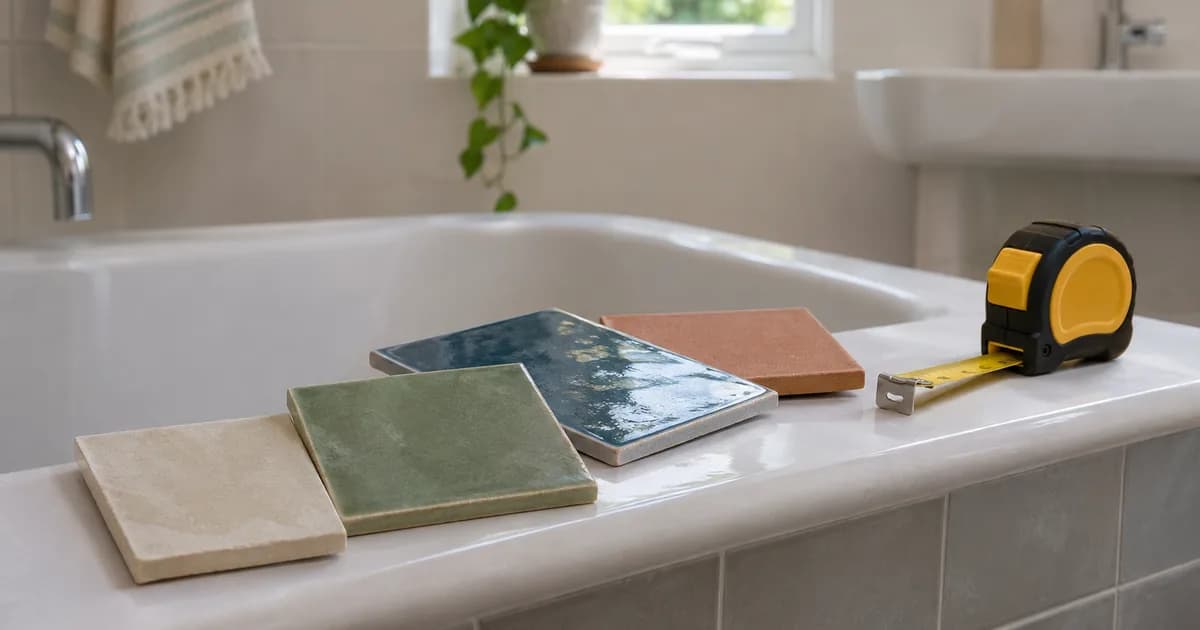
- Order tile and finish samples and look at them in your bathroom light.
Details that change the cost
Bathrooms are full of hidden costs. Waterproofing is essential and unglamorous, and doing it properly takes time and skill. Moving a toilet or shower changes the plumbing and may require opening floors. Ventilation matters, because a bathroom without proper airflow will develop damp and mold however nice the tiles look. Electrical work near water must meet safety standards, which in many places means a qualified electrician.
When you review a concept, ask which parts need these kinds of work. A design that keeps the sink, toilet and shower where they are will almost always cost less than one that moves them, even if the finishes are identical. That insight alone can shape your budget.
Questions for your contractor
Ask who handles waterproofing and what warranty applies, how long the bathroom will be out of use, what happens if hidden damage is found behind old tiles, and which items are included in the price. Having these answers in writing helps you compare quotes fairly.
Tiles, fixtures and finishes
Finishes shape the character of a bathroom, and each choice has practical consequences. Larger tiles have fewer grout lines, which look cleaner and are easier to maintain, while small tiles and mosaics suit curves and shower floors. Matt tiles are safer underfoot, while glossy ones reflect light but show water marks. Dark grout hides stains, and pale grout looks fresh but needs more care.
Fixtures set the style. A wall-hung toilet and vanity free up floor space and make cleaning easier, while freestanding baths make a statement but need space and a suitable floor. Taps and fittings in brushed metal show fewer marks than polished ones. Preview a few combinations, then ask your supplier about durability and cleaning. A bathroom is used every day, so choices that look good and are easy to keep clean tend to age best.
Get useful quotes
Share the concept with contractors, along with your measurements. Ask for itemized quotes that separate materials and labor, so you can compare and adjust. Agree on what is included, such as removal of old fixtures, waterproofing and finishing, in writing.
Storage, lighting and accessibility
A beautiful bathroom without storage becomes cluttered quickly. Think about where towels, toiletries and cleaning products will live, and consider recessed niches in a shower, a vanity with drawers or a slim cabinet above the toilet. Good lighting matters too: a bright, even light around the mirror helps with grooming, while a softer light elsewhere sets a relaxing mood.
If anyone in the household has limited mobility, or if you plan to stay in the home for many years, consider features such as a level-access shower, grab rails, non-slip flooring and wider doorways. These can be designed to look stylish, and including them at the start is cheaper than adding them later. A thoughtful bathroom works for everyone who uses it, now and in the future.
Living without a bathroom, and planning the timeline
If this is your only bathroom, the practical side of the project matters as much as the design. Work like this often takes longer than people expect, so plan where you will wash, how long you can manage and what happens if a delay occurs. Some households arrange to use a gym, a friend's home or a temporary facility for part of the project.
Ask your contractor for a realistic timeline with the main stages: removal, plumbing and electrics, waterproofing, tiling, fitting and finishing. Find out which stages depend on deliveries and which need drying time, since a missing tile or fixture can stop everything. Order materials in advance and check them on arrival. A project that is planned around real timelines is far calmer than one that depends on hope, and the finished bathroom will feel better for it.
Related guides
For a kitchen, see how to plan a kitchen makeover on a small budget. For the general approach, read how to visualize a home renovation before spending money. For the wider picture, see our guide to visualizing a renovation.
Frequently asked questions
Can I see a new bathroom in my own photo?
Yes. Upload a photo, describe the change, and generate a concept to compare. Treat it as an idea to discuss with a professional.
Can I preview different tile colors?
Yes. Generate a version for each color and compare them with the original. Confirm with real samples before you order.
Does the preview check plumbing or layout?
No. It does not know your pipes, drainage or ventilation. Ask a qualified professional about the practical side.
Is a refresh enough?
Often. If the layout works, repainting, new lighting, a new vanity top and fresh grout can change the room's look without moving fixtures.
Tiles are hard to undo, so look before you buy. The Bathroom Remodel Visualizer lets you test a tile change on your own photo, and real samples settle the choice.