
How to Plan a Kitchen Makeover on a Small Budget and Preview It First
Find where a small budget goes furthest, preview cabinet, color and lighting changes on a photo of your kitchen and phase the work sensibly.
Written by the Pixoate team. We check how each tool behaves before we describe it, and we date any prices or portal rules we quote.
A kitchen remodel is one of the largest home projects, and the budget disappears quickly: cabinets, counters, flooring, appliances, labor. Many people do not need to replace everything. A tired kitchen can often be refreshed by changing the few things that carry the look, and the smartest way to decide is to see the options before you pay for any of them.
This guide shows how to plan a budget kitchen makeover, what usually gives the biggest visual change for the least money, and how to preview ideas on a photo of your own kitchen.
What to do, in order
- List what bothers you, then separate cosmetic fixes from structural ones.
- Spend on the surfaces people see most: cabinet fronts, counters, walls, lighting.
- Preview two or three combinations on a photo.
- Get real quotes and samples for the favorite.
- Do the highest-impact changes first, and phase the rest.
Decide what actually needs to change
Write down what you dislike. Common answers are dated cabinet color, worn counters, dim lighting, an old backsplash or a floor that clashes. Then ask whether each one is cosmetic or structural. Repainting, new handles and new lighting are cosmetic. Moving a sink, gas line or wall is structural, costs far more and may need permits.
Most budget makeovers stay cosmetic.
Where a small budget goes furthest
- Cabinet color and handles. Painting or refacing cabinets changes the whole room, and new handles are a low-cost upgrade.
- Walls and trim. A fresh, lighter color makes a kitchen look cleaner and larger.
- Lighting. Better ceiling and under-cabinet light changes how everything looks.
- Backsplash. A simple tile or panel can refresh the space behind counters and the sink.
- Counters. Replacement is costly, so consider whether resurfacing or keeping them is enough.
- Flooring. Worth changing only if it is badly worn or clashes with the rest.
Prices vary a lot by region and materials, so get quotes for your situation.
A worked example: the honey-oak kitchen
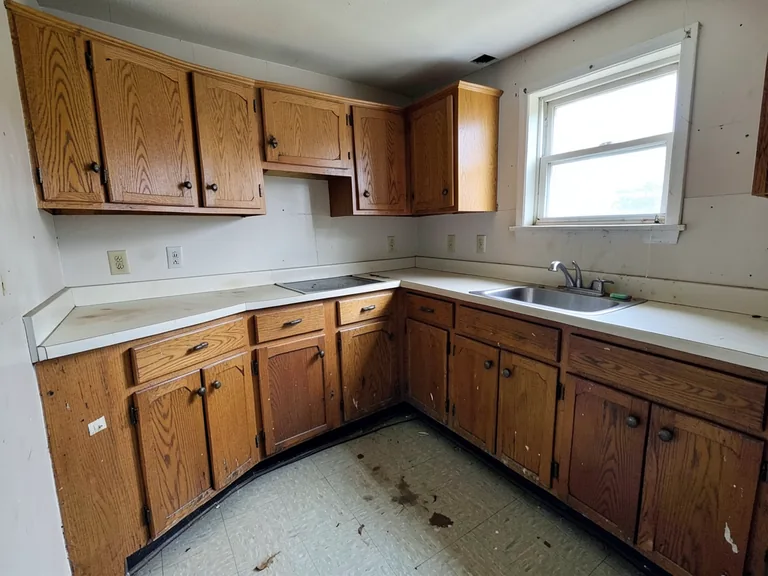
Picture a kitchen with honey-oak cabinets, beige tile counters and a dated vinyl floor. The owners have a modest budget and one big worry: if they change the wrong thing, the kitchen will look like a patchwork.
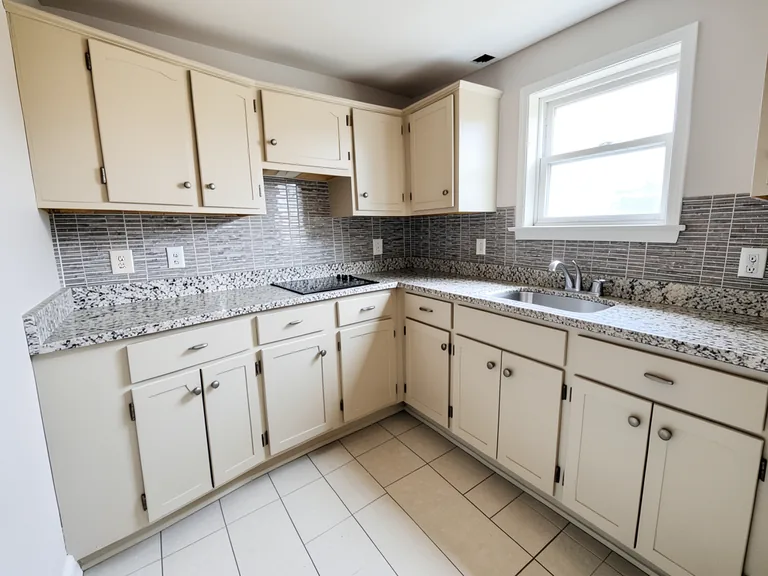
They preview three combinations on a photo. First, painting the lower cabinets a deep green while leaving the upper ones light. Second, painting every cabinet the same soft white. Third, keeping the oak but replacing the handles and adding a simple tile backsplash. Side by side, the green looks striking but heavy in a small room, the all-white version looks bright but a little flat, and the third option looks tidy but leaves the room feeling dated.
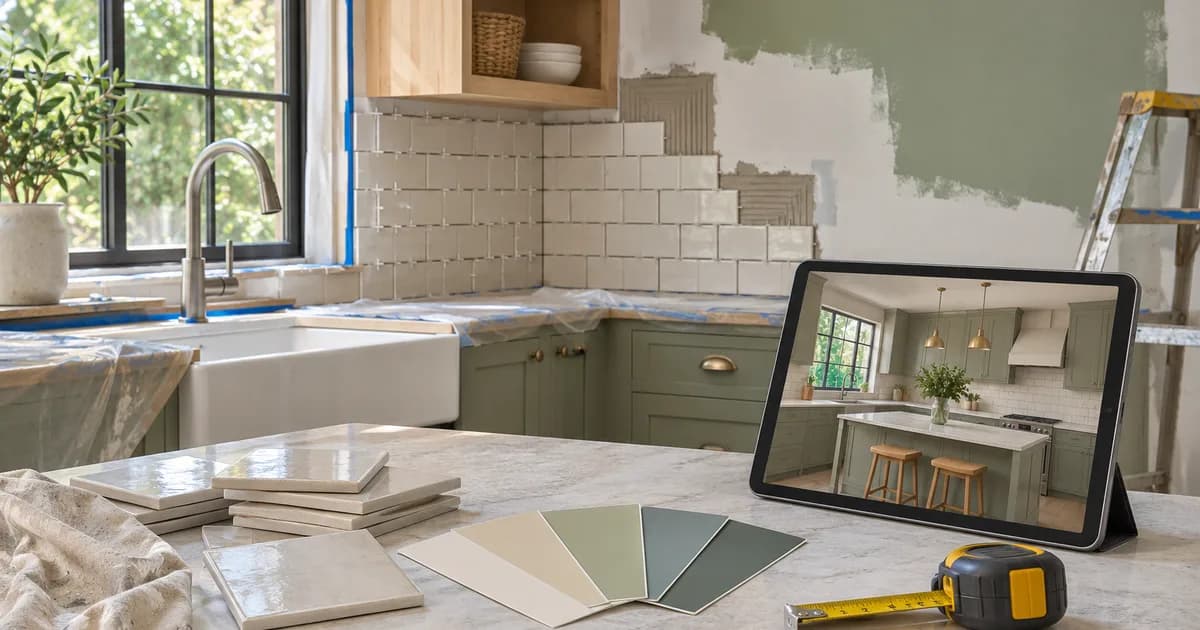
The answer they choose is a combination: white upper cabinets, deep green lower cabinets, new brass handles. The preview did not give them that idea, but it let them test it in minutes instead of discovering it after paying for paint and labor. And because the counters and floor stayed the same in every version, they could see that replacing them was optional for now.
Preview the changes on your own photo
- Take a photo of your kitchen from a corner, with the camera level and the lights on.
- Open the Kitchen Remodel Visualizer and upload it.
- Describe one change at a time: "paint the lower cabinets deep green and keep the counters and floor unchanged," then another version with a different color.
- Add extras such as a tile backsplash, open shelving, pendant lights or a kitchen island using the buttons on the page, where the space allows.
- Compare the versions with the original.
The tool is built on the real estate photo editor, which you can also use to describe any other change in your own words.
Change one thing at a time
If you change cabinets, counters and flooring in one picture, you will not know which change made the kitchen better. Preview each change separately, then combine the ones you like. Ask the tool to keep the windows, doors, camera angle and everything you are not changing the same.
Check the idea against reality
A generated image is a design idea, not a quote or a plan. Before you spend:
- Measure the kitchen and any items you plan to buy.
- Check that appliances, doors and drawers have room to open.
- Order paint, tile and counter samples and look at them in your own light.
- Ask a qualified professional about plumbing, electrics and gas work.
- Get itemized quotes, so you can drop or postpone items.
Where people overspend
Budget kitchens go over budget in predictable places. Appliances are the first: a single oven or fridge can cost more than all the cosmetic work combined, so check what you actually need to replace. Counters are the second: new surfaces are expensive and often unnecessary if the existing ones are sound, since resurfacing or leaving them alone can save a large share of the budget. Moving things is the third: shifting a sink, a gas point or a wall quickly multiplies costs through plumbers, electricians and permits.
A good rule is to spend where the eye lands first. Cabinet color, lighting and handles are visible from the doorway and change the room's character, while a new tap or drawer runner is nearly invisible. If the budget runs short, protect the visible items and defer the hidden ones.
Painting, refacing or replacing cabinets
Cabinets dominate a kitchen's look, and there are three broad ways to change them. Painting is the cheapest and quickest. Done well, with proper cleaning, sanding, primer and a durable paint, it can transform a dated kitchen, though the result depends on the preparation and the condition of the doors. Refacing keeps the cabinet boxes and replaces the doors and drawer fronts, which gives a new style while avoiding the cost and mess of a full replacement. Replacing the whole kitchen is the most expensive and disruptive option, and it makes sense when the layout is wrong or the boxes are damaged.
Try each look on a photo first, since a color that looks fresh on a wall can feel very different across a whole set of cabinets. Ask any painter or fitter what the surface needs, and look at examples of their finished work. Careful preparation is what keeps a budget makeover looking good for years.
Phase the work
If the budget is tight, do the changes in order of visual impact: paint and handles first, lighting second, backsplash third, bigger items later. A phased plan keeps you from starting something you cannot finish.
If you plan to sell
If you are preparing to sell, a modest refresh often makes more sense than a full remodel. See how to make property listing photos look professional for presenting the result, and how to visualize a home renovation before spending money for the wider approach. Contractors can use the same approach with clients, as shown in how to present renovation ideas to clients with AI, and bathrooms follow a similar path in how to visualize a bathroom renovation before starting.
Questions to ask before you hire anyone
Before agreeing to any work, ask what is included in the quote, what is excluded and what happens if something unexpected turns up behind the old units. Old kitchens sometimes hide damp, uneven walls or outdated wiring, and the cost of putting them right can surprise you. Ask how long the kitchen will be out of use and whether the quote covers disposal of old units and making good the walls and floor.
If you are doing some of the work yourself, be realistic about which jobs suit amateurs. Painting and fitting handles are friendly to beginners. Plumbing, electrics and gas are not, and rules in many places require qualified people for them. Splitting the work sensibly between you and the professionals is the most reliable way to keep a small budget under control.
Lighting layers in a kitchen
Kitchens need light for different jobs, and a single ceiling fitting rarely does them all. Overhead light fills the room, task light such as strips under wall cabinets brightens worktops for chopping and cooking, and accent or pendant light adds warmth and character over an island or table. Adding task lighting is one of the cheapest, most noticeable improvements, because it removes shadows from the places where you work.
Check the color of the bulbs, as warm white feels cozy and cool white feels clinical, and keep them consistent across the room. If you preview a pendant light in a concept, remember it will need a power supply and a switch in the right place. Thinking about lighting early keeps the electrical work simple and the finished kitchen pleasant to use.
Related guides
For the wider picture, see our guide to visualizing a renovation.
Frequently asked questions
Can I see a new kitchen in my own photo?
Yes. Upload a photo of your kitchen, describe the finishes you want, and generate a concept. Treat it as an idea to discuss with a contractor, not a finished plan.
What is the cheapest way to update a kitchen?
Usually paint, new handles, better lighting and a simple backsplash. These change how the kitchen looks without moving anything.
Do I need a designer?
For structural, plumbing or gas changes, you need qualified professionals. For cosmetic updates, many people plan their own and use previews to decide.
How accurate are the previews?
They show a plausible look, not exact colors, materials or dimensions. Confirm with samples and measurements.
The cheapest kitchen mistakes are the ones you catch before buying. You can test cabinet colors, handles and lighting on your own photo with the Kitchen Remodel Visualizer.